 By pent1
Edward Kieswetter : Renaissance Man
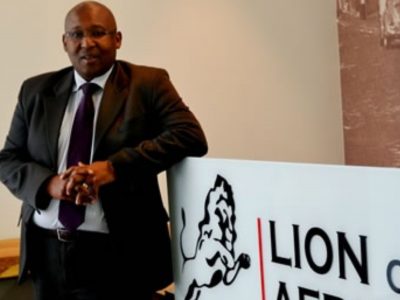
 Edward Kieswetter accepted the job at Alexander Forbes, he says, because he had clarity of purpose. The former Deputy Commissioner of SARS had no idea what he wanted to do when he decided to exit civil service after ten years. He imagined that, at 50, he would go on to do the things he was born to do: teaching and writing.
His time in the public sector made him painfully aware that financial service instructions had earned the distrust of public policy makers, and so, when he was offered the position of GCE, he saw an opportunity to demonstrate that is was possible to run a financial institution ethically.
At the time of his appointment, SA’s largest pension fund administrator had been involved in a protracted legal battle, facing a R1,1bn claim from seven retirement funds for surplus stripping worth millions in the 1990s. Instead of being daunted by the mess, Kieswetter says, “Lifecare was my gift.” It was the opportunity to demonstrate that things can be done differently. “I joined the company to clean up its act.”
Kieswetter believed from the start that the matter was not one Alexander Forbes should choose to defend. “It is impossible to reconstruct intent,” he says, “and I did not want to defend people whose intent I did not know.”
Within a year he had negotiated and settled the claim, both with the Registrar of Pension funds and the claimants. The company accepted accountability for the actions of the employees that masterminded the scheme and pleaded guilty to contravening provisions of the Financial Institutions Act. It paid out about R346m to settle the claims and R5.5m to the curator – all in all, a far cry from the more than R1bn demanded when the summons was served in 2008. “What the regulator wanted was not proportional,” Kieswetter says. He was determined to do the right thing but not to surrender unconditionally.
Lifecare was my gift.” It was the opportunity to demonstrate that things can be done differently. “I joined the company to clean up its act.
“In life, you act either out of fear or out of conviction,” he says. The consequences of Lifecare impacted negatively on ordinary people, and he wanted to correct that. The way he handled the settlement entrenched his personal credibility, and set a clear path for the future.
Edward Kieswetter is a true Renaissance man. On the one hand he is highly learned: his string of qualifications includes a diploma in engineering education, a BA in teaching mathematics and science and a master’s in cognitive development. He is knows science and business.
On the other, he is vested in the things that provide spiritual meaning:, he plays scrabble; his passions are writing, cooking, travelling, the collection – and drinking of – red wine.
He embraces all things that provide “a clear sense of being; the clarity of who I am.” For him, life is a learning experience on multiple levels. He writes music and he watches rugby (an ardent Stormers and Springboks fan). He likes construction, he builds stuff. He quotes Shakespeare. He tweets.

He is now in a position to make other people’s lives better, which is a long way from his Western Cape childhood in a township where, he remembers, “the pastimes were drunkenness and killing each other.” It is where he learned that you have to “fight your way through life.” But he grew in a god-fearing home, where his father taught him the ethic of hard work and his mother taught him that he is here to be a blessing.
His many degrees were earned the hard way. After matric there was no money for a tertiary education. He wanted to do engineering, but finding no available internship, he took a labourer’s job at an engineering firm. When his applications for something better finally landed him a meter-reading job at CT municipality, he started studying electrical engineering part-time at the (then) Athlone technikon. And his learning never stopped.
While doing his master’s at UCT he was awarded a scholarship in cognitive studies at Harvard University, and, on completion, was faced with a difficult choice. Stay in the States, and do the PhD – which would have immediately added a gold star to his CV – or to come home for “one of the most defining periods of my life.” I was 1991 and the exciting changes at home meant that, as true South Africans, the Kieswetters could not live in America during this time. Boston lost. Edward headed for Ogies as senior general manager for Eskom, and started making his mark as a person that embraces the gift of the challenge.
The challenge at Alexander Forbes has not diminished. Once he closed the book on Lifecare, he started walking the dual-track tightrope of relisting on the JSE (the company delisted in 2007 after being bought by a private consortium) while preparing for a possible trade sale. About a month after he presented the two options to the board, Alexander Forbes successfully listed on the JSE on Thursday, 24 July this year. e. He believed that listing would provide continuity and provide the best value for shareholders.
“The work does not end,” he says. “The first five years were spent addressing the integrity of the organisation, building the business and working on the core. Now we have to achieve. For me, the foundation has just been laid.” He has taken the organisation from a hardly defensible position to a place where doing the right thing is articulated through and inspired by a sense of higher purpose.